There is something exciting about putting on a new pair of glasses. The frames look fresh, the lenses are spotless, and you expect the world to snap into perfect focus. Then you put them on and think, “Why does everything feel a little strange?”
Perhaps the floor looks farther away, your computer screen feels slightly curved, or your eyes seem to be working harder than usual. Before assuming that your prescription is incorrect, remember that a short glasses adjustment period is common, especially when your prescription, frame shape, lens type, or measurements have changed.
However, discomfort should gradually improve. When new glasses feel wrong for more than a few days, or the symptoms are making everyday activities difficult, it is worth having them checked.
Why Do New Glasses Sometimes Feel Strange?
Your eyes do not work alone. Your brain interprets the images your eyes send to it, including depth, distance, movement, and shape. When you begin wearing a new prescription, your brain may need time to adjust to the way the new lenses present those images.
During the first few days, you may notice:
- Mild eye strain
- A light headache
- Slight dizziness
- Objects appearing larger or smaller
- Difficulty judging stairs or curbs
- A “swimming” sensation when moving your head
- Needing to turn your head differently when reading
These effects can be more noticeable when your prescription has changed significantly or when you are switching to progressive lenses. Many people adjust within several days, although a larger prescription or lens change can take one or two weeks. In some cases, full adaptation may take a little longer.
How Long Is the Normal Glasses Adjustment Period?
For a small prescription change, your new glasses may feel comfortable within a day or two. A stronger change can take approximately one to two weeks.
Progressive lenses often require a longer adjustment because different parts of the lens are designed for distance, intermediate, and near vision. You may need to practise pointing your nose toward what you want to see rather than looking through the edge of the lens.
Try to wear your new glasses consistently during this period. Frequently switching between your old and new glasses may make it harder for your brain to adapt. That said, you should notice some improvement as the days pass. Your glasses should not continue feeling equally uncomfortable without any sign of progress.
When New Glasses Feel Wrong, Check the Fit
Not every problem is caused by the prescription. Sometimes, the frames simply need a professional adjustment.
Your glasses may require fitting if they:
- Slide down your nose
- Sit higher on one side
- Pinch behind your ears
- Press against your temples
- Rest too close to your eyelashes
- Feel loose when you look downward
- Leave uncomfortable marks on your nose
Small changes to the nose pads, temples, frame angle, or position of the lenses can make a major difference. This is especially important with progressive lenses because your eyes need to line up correctly with the designated viewing areas.
Avoid bending or twisting the frames at home. A small adjustment may look simple, but it is easy to damage the hinges, weaken the frame, or make the alignment worse. Bring your glasses to the Smart Eyes Courtenay clinic so our team can check the fit properly.
Signs Your Glasses May Need to Be Checked
A mild adjustment period is one thing. Ongoing or severe discomfort is another. Contact your optician or optometrist when you experience:
Blurry Vision That Is Not Improving
Your vision may seem slightly unusual at first, but it should become clearer as you adjust. If one or both eyes remain blurry, the prescription, lens measurements, or frame alignment may need to be reviewed.
Persistent Headaches or Eye Strain
A mild headache during the first few days can occur. Headaches that continue, worsen, or return every time you put on your glasses deserve a closer look.
Double Vision
New glasses should not cause ongoing double vision. Stop using them for activities such as driving and contact your eye-care provider for advice.
Trouble Seeing at a Particular Distance
You may be able to see clearly across the room but struggle with your computer, phone, or reading material. This could indicate that the lens design or prescription does not match how you use your glasses.
One Eye Feels Clearer Than the Other
A difference between the two lenses may take some time to adjust to, especially when one eye has a stronger prescription. However, a significant or continuing imbalance should be checked.
You Have to Tilt Your Head to See Clearly
Constantly lifting your chin, lowering your head, or turning to one side may indicate that the glasses are sitting incorrectly or that the optical centres are not lining up as intended.
Make Sure Your Glasses Match Your Daily Needs
A prescription is only one part of choosing the right glasses. Your work, hobbies, screen habits, and typical viewing distances also matter.
For example, someone who spends most of the day working across two computer monitors may need a different lens solution from someone who mainly drives, reads, or works outdoors. Standard progressives may work well for everyday use, while occupational or computer lenses can offer a wider area for intermediate vision.
Tell your optometrist how you plan to use your glasses. The more your eye-care team understands your daily routine, the easier it is to recommend an appropriate lens design.
When Should You Return to the Courtenay Clinic?
You do not have to wait until the discomfort becomes unbearable.
Come back to our Courtenay clinic when:
- Your symptoms are not improving after several days
- You still cannot wear the glasses comfortably after one or two weeks
- The frames feel crooked, loose, tight, or painful
- Your vision is significantly blurry
- You feel unsafe walking or driving
- You cannot find a comfortable viewing area in progressive lenses
Bring your new glasses and, when possible, your previous pair. Comparing them can help the team understand what changed and identify whether the issue relates to the prescription, lens type, measurements, or frame fit.
Summer Glasses Promotion at Smart Eyes
Summer is a great time to update your eyewear before holidays, road trips, outdoor events, and long sunny days around Courtenay and the Comox Valley.
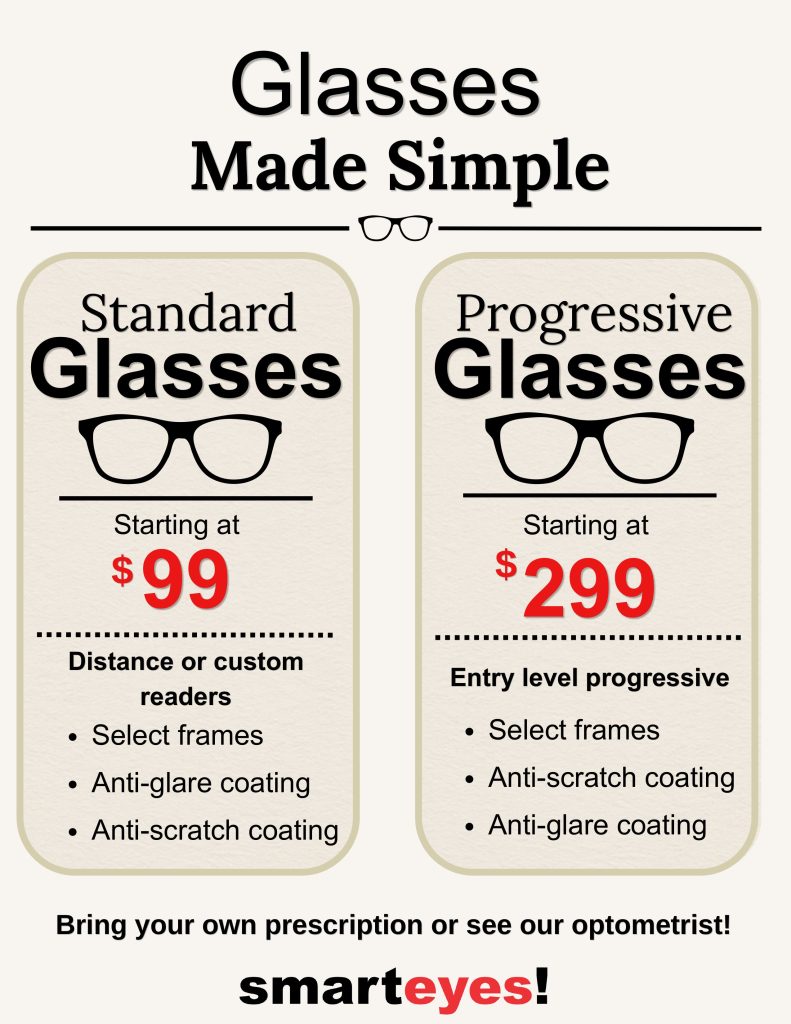
Smart Eyes is currently offering:
Standard Glasses Starting at $99
Choose from select frames with distance lenses or custom readers. The offer includes anti-glare and anti-scratch coatings.
Progressive Glasses Starting at $299
Choose entry-level progressive lenses with select frames, anti-scratch coating, and anti-glare coating.
Bring your own valid prescription or book an appointment to see our optometrist. Promotion availability, frame selection, prescription requirements, and additional lens options may affect the final price. Contact the clinic for complete details.
Your New Glasses Should Feel Comfortable
A new prescription can feel unfamiliar at first, but wearing glasses should not remain frustrating or uncomfortable. Give your eyes a reasonable adjustment period, wear your new glasses consistently, and pay attention to whether the symptoms are improving.
When your new glasses feel wrong, you do not have to figure it out alone. Visit Smart Eyes in Courtenay so our team can check the frame fit, lens position, and prescription. Sometimes, one small adjustment is all it takes to help everything look and feel right again. Or call us today to make an appointment.